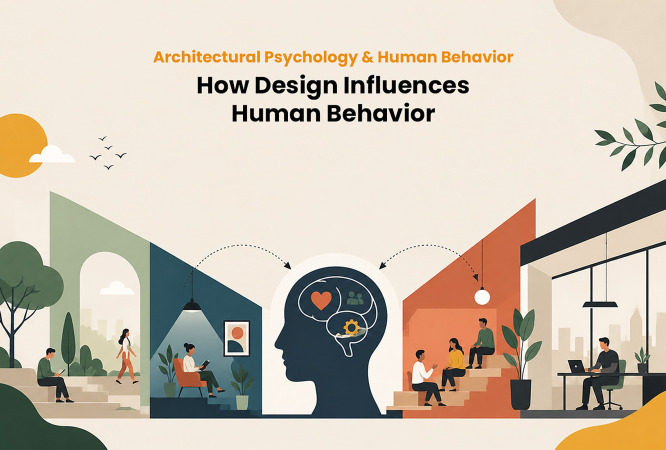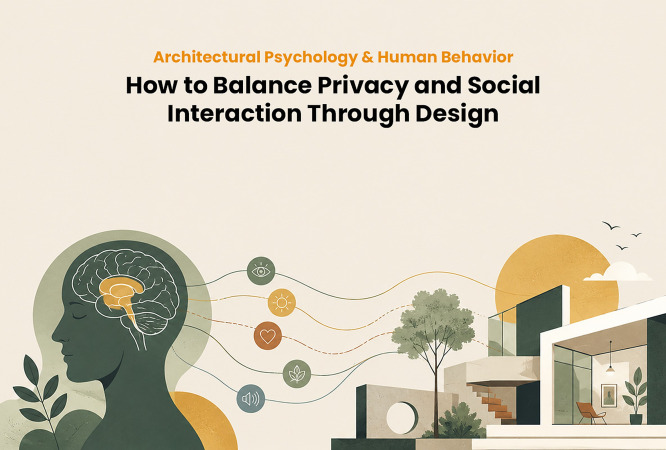
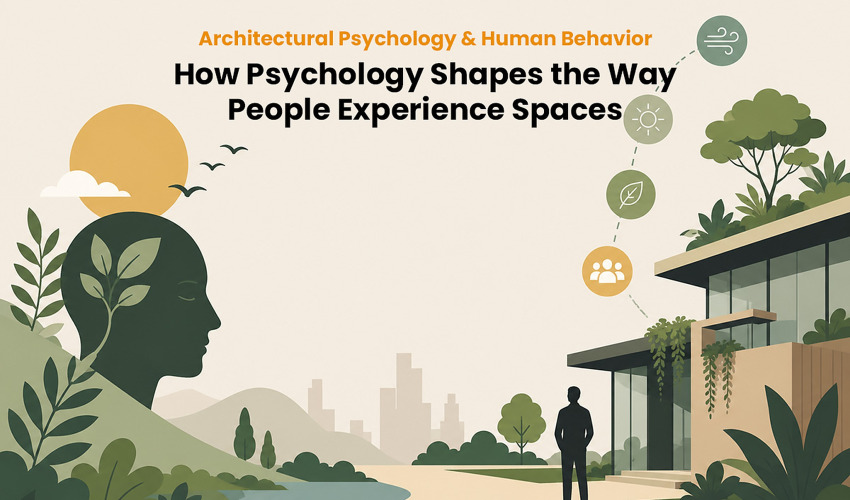
Environmental Psychology for Architects
Get access to all learning content and every RTF Academy course with RTF Academy Pro
Buildings shape moods daily.
Most designers never learn how.
Ground your design instincts in the science of how environments affect people, and make choices you can defend with evidence, not just taste.
Psychology will back up your spatial instincts
- Design from evidence — back every spatial decision with how humans actually respond
- Predict occupant behavior — know how people will use a space before it is built
- Tune atmosphere deliberately — adjust light, color, and layout to the feeling a space needs
- Fix problem spaces — diagnose why rooms feel wrong and correct them with confidence
- Persuade with research — win client debates using solid findings instead of personal opinions
- Elevate everyday briefs — bring psychological depth to homes, offices, and public buildings
Built by one of the most-read architecture platforms in the world.
RTF | Rethinking The Future has spent over a decade publishing the ideas, projects and voices shaping architecture — and now brings that depth to learning. Every course is researched, written and produced by the RTF team.
When you understand people, buildings design themselves.
A clear path. Eight steps.
Everything unlocks instantly with membership · learn at your own pace
If you see yourself here, start today.
A few hours from now, you could already see differently.
I designed for years on intuition about how people feel in space, some of it right, plenty of it wrong. Environmental psychology gave my instincts an evidence base, from stress responses to restorative environments. The hospital waiting area I redesigned after this course uses those findings directly, and staff report visibly calmer patients.
Simple by design.
Watch
Short, focused video lessons — each one a single idea, clearly explained.
Apply
End every lesson with a small task that pushes your real project forward.
Transform
Watch your work develop a point of view that is unmistakably yours.
Answered simply.
Is environmental psychology too soft a science to base design on?
It's a robust, research-backed field — and this course keeps only the findings solid enough to design with. You'll gain evidence for decisions you currently make on instinct.
I'm an interior designer, not an architect — does it apply to me?
Completely. Interiors are where people spend most of their time, so psychological effects of space matter even more at that scale.
Do I need any prior experience?
No. Every course starts from where you are and builds up step by step, in plain language.
Is this software training?
No — software changes yearly. The thinking you learn here lasts a career.
How does it work?
Short video lessons with a small practice task after each. Any device, your pace.
What does membership include?
One membership unlocks every course on RTF Academy — all 450+, nothing sold separately. And you stay in control: cancel anytime in one click, and you will never be charged again.
Ready to see your work change?
Your next project could be the one that feels truly yours.
- 8 Sections
- 25 Lessons
- 4 Hours
- Introduction to Environmental Psychology3
- Perception and Spatial Experience3
- Psychology of Comfort3
- Human Emotions and Space3
- Social Behavior and Architecture3
- Biophilic and Healing Environments3
- Behavioral Design in Practice3
- Urban Psychology and Future Directions4
Reviews
Online and at your own pace.
Get access to all learning content
and every RTF Academy course with RTF Academy Pro
I designed for years on intuition about how people feel in space, some of it right, plenty of it wrong. Environmental psychology gave my instincts an evidence base, from stress responses to restorative environments. The hospital waiting area I redesigned after this course uses those findings directly, and staff report visibly calmer patients.
You might be interested in
-
0 Students
-
25 Lessons
-
0 Students
-
25 Lessons
-
0 Students
-
25 Lessons
-
0 Students
-
25 Lessons