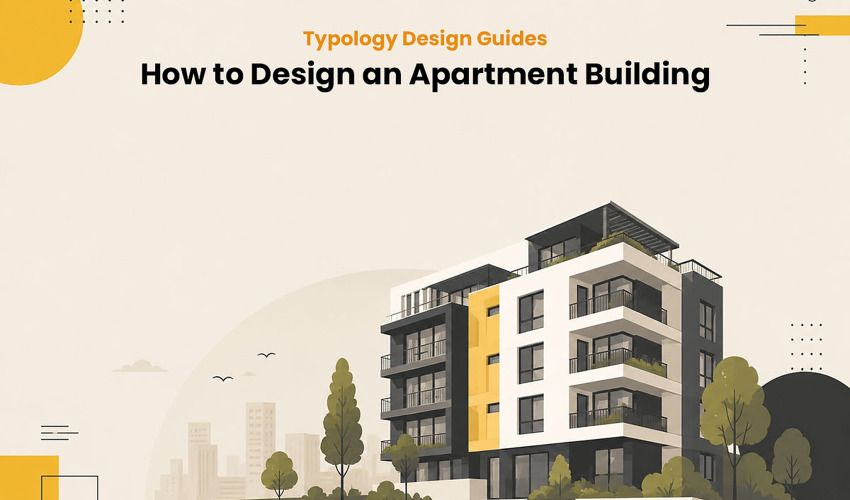
How to Design an Apartment Building
Get access to all learning content and every RTF Academy course with RTF Academy Pro
Stacked lives, shared walls.
Great design keeps the peace.
Learn to design apartment buildings people are proud to call home, balancing privacy, community, and lasting value on every floor, for developers and residents alike.
Apartment stacks you design will live well on all floors.
- Layer privacy and community — so close neighbours coexist happily instead of merely tolerating each other
- Design plans that sell — quickly and homes that keep their promises for decades after
- Maximise light and outlook — for every single unit rather than just the lucky corners
- Satisfy developers and dwellers — striking a balance that most designers fumble on their first attempt
- Refine circulation gracefully — along the whole journey from street and lobby to front door
- Build residential expertise — in the steadiest, most dependable sector of the entire market
Built by one of the most-read architecture platforms in the world.
RTF | Rethinking The Future has spent over a decade publishing the ideas, projects and voices shaping architecture — and now brings that depth to learning. Every course is researched, written and produced by the RTF team.
Homes stacked well become communities. Learn how.
A clear path. Five steps.
Everything unlocks instantly with membership · learn at your own pace
If you see yourself here, start today.
A few hours from now, you could already see differently.
My apartment plans always had that one dark bedroom I pretended not to see. Learning stacking discipline, core efficiency and daylight rules of thumb eliminated those quiet failures. I can now lay out a residential floor plate that works structurally, legally and socially in the first pass.
Simple by design.
Watch
Short, focused video lessons — each one a single idea, clearly explained.
Apply
End every lesson with a small task that pushes your real project forward.
Transform
Watch your work develop a point of view that is unmistakably yours.
Answered simply.
Apartment buildings all look the same — what will I learn to do differently?
The sameness comes from unexamined defaults. The course digs into core placement, unit mix, daylight and shared space, showing where better decisions create better buildings at the same cost.
Does it cover the regulatory and efficiency pressures developers impose?
Yes. You learn to hit efficiency targets and still protect livability — the skill that makes architects valuable in residential work.
Do I need any prior experience?
No. Every course starts from where you are and builds up step by step, in plain language.
Is this software training?
No — software changes yearly. The thinking you learn here lasts a career.
How does it work?
Short video lessons with a small practice task after each. Any device, your pace.
What does membership include?
One membership unlocks every course on RTF Academy — all 450+, nothing sold separately. And you stay in control: cancel anytime in one click, and you will never be charged again.
Ready to see your work change?
Your next project could be the one that feels truly yours.
- 5 Sections
- 25 Lessons
- 4 Hours
- 1. Understanding the Type5
- 2. Brief, Programme and Areas5
- 3. Planning and Circulation5
- 4. Codes, Comfort and Systems5
- 5. Getting It Built and Judged5
- 5.1Structure and materials for an apartment building
- 5.2Cost drivers and value-engineering traps
- 5.3Operations: how an apartment building works on day 3,000
- 5.4Case studies: Unité d’Habitation by Le Corbusier, 8 House by BIG and Kanchanjunga Apartments by Charles Correa
- 5.5The design checklist for an apartment building
Reviews
Online and at your own pace.
Get access to all learning content
and every RTF Academy course with RTF Academy Pro
My apartment plans always had that one dark bedroom I pretended not to see. Learning stacking discipline, core efficiency and daylight rules of thumb eliminated those quiet failures. I can now lay out a residential floor plate that works structurally, legally and socially in the first pass.
You might be interested in
-
0 Students
-
25 Lessons
-
0 Students
-
25 Lessons
-
0 Students
-
25 Lessons
-
0 Students
-
25 Lessons